The Quick Answer
Preventative HVAC maintenance saves money because it catches worn parts, dirty filters, and small leaks before they turn into breakdowns. Regular tune-ups keep your system running efficiently, which lowers energy bills, extends equipment life, and helps you avoid costly emergency repairs and premature replacement of your furnace or air conditioner.
Nobody budgets for a broken furnace in January. But that’s exactly what happens when folks skip their tune-ups. Preventative HVAC maintenance is the boring little habit that keeps the big, scary bills away. Let’s talk about why it works, what it costs, and how you can build a plan that actually saves you real money.
What Preventative HVAC Maintenance Actually Means
Preventative HVAC maintenance means having a technician check, clean, and tune your heating and cooling system on a regular schedule, so small problems get caught before they turn into breakdowns or expensive repairs.
Think of your HVAC system like your body. You don’t wait until you’re flat on your back to see a doctor, right? You get checkups so small stuff gets caught early. Your furnace and air conditioner work the same way. Dust builds up, parts wear down, and refrigerant levels drift, all quietly, all the time. A tune-up catches that stuff while it’s still cheap to fix.
If you want the plain-English version, no engineering degree required, here it is: maintenance is cheap, repairs are pricey, and replacements are downright brutal on your wallet. Most pros recommend two visits a year, one in spring for your air conditioner and one in fall for your furnace. That’s it. Two visits a year stands between you and a whole lot of heartache.
How Preventative Maintenance Puts Money Back in Your Pocket
Regular HVAC maintenance saves money by keeping your system running at full efficiency, which lowers your energy bills, and by catching worn parts early, which prevents costly emergency repairs and shortens the life of expensive equipment.
Here’s a picture for you. My buddy Ray never changed the oil in his old pickup truck. Not once. He figured it was running fine, so why bother? Well, that engine seized up on the highway one summer afternoon, and it cost him more to fix than ten years of oil changes combined. That’s the Fix-It-Later Fee, and it’s brutal. Skip your HVAC tune-ups long enough, and you’ll pay it too, except instead of a truck, it’s your furnace dying at 2 a.m. in January.
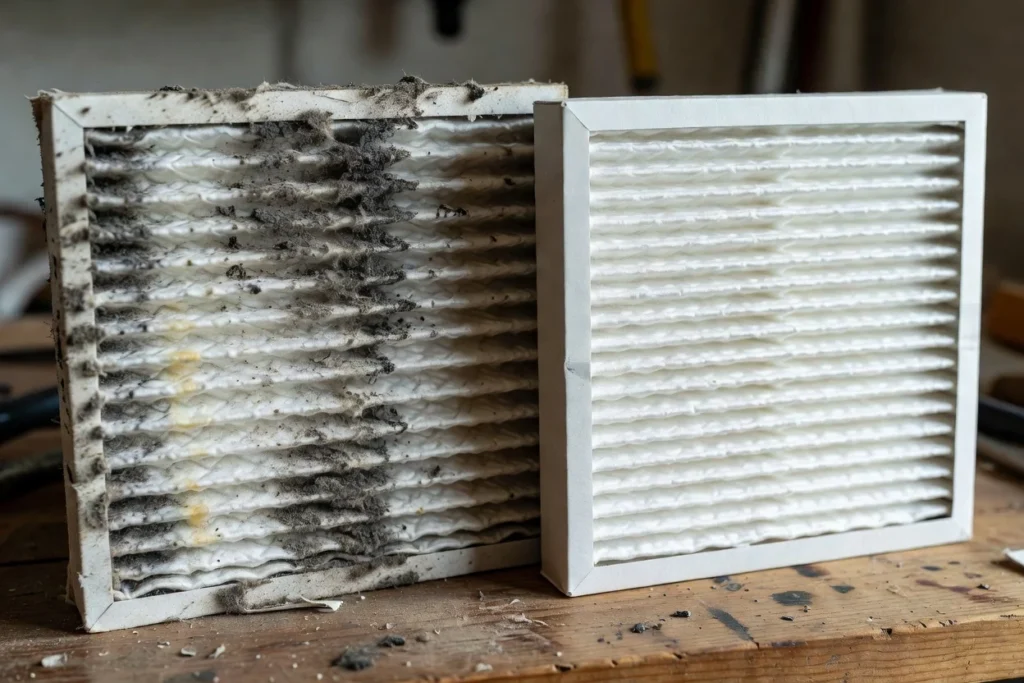
A dirty coil or a clogged filter makes your system work harder to do the same job, which burns more electricity every single month. Studies from the Department of Energy show a well-maintained system can run 15 percent more efficiently than a neglected one. Skipping maintenance doesn’t save you money, it just moves the bill to later and adds interest. Multiply that savings over ten or fifteen years and you’re talking about serious cash staying in your pocket instead of floating out through leaky ductwork.
The furnace never quits on a warm afternoon in June, it waits for the coldest night it can find, so get ahead of it.
Your HVAC Preventive Maintenance Checklist, Room by Room
A solid HVAC preventive maintenance checklist covers filters, coils, thermostats, ductwork, and safety controls, both inside your home and out at the condenser unit, so nothing important slips through the cracks.
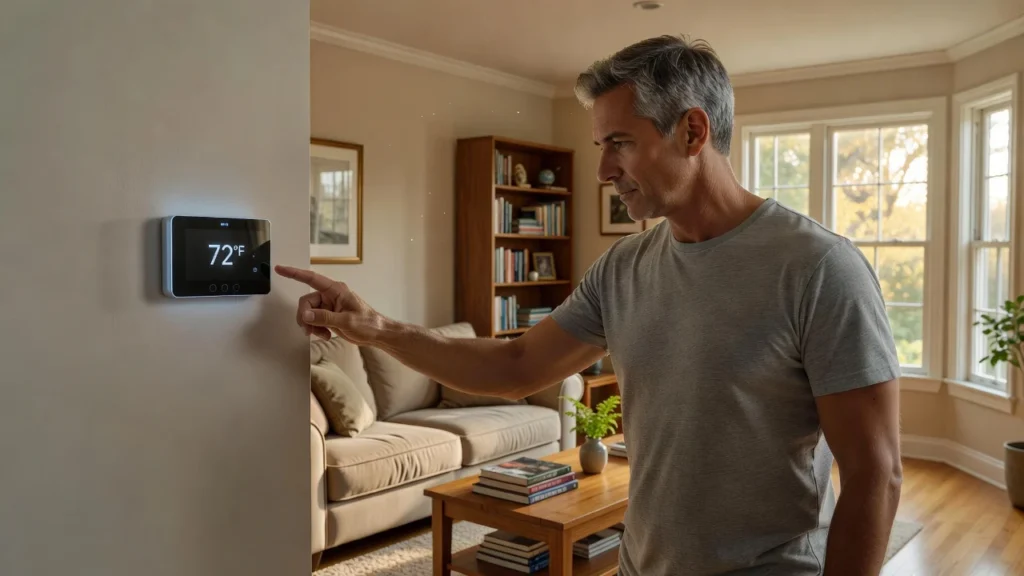
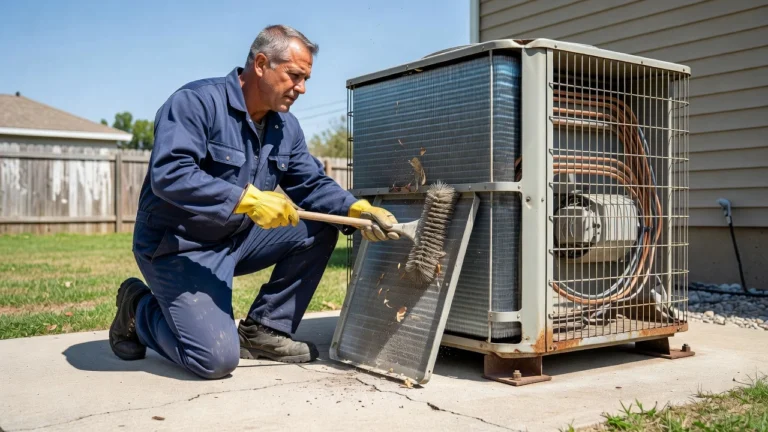
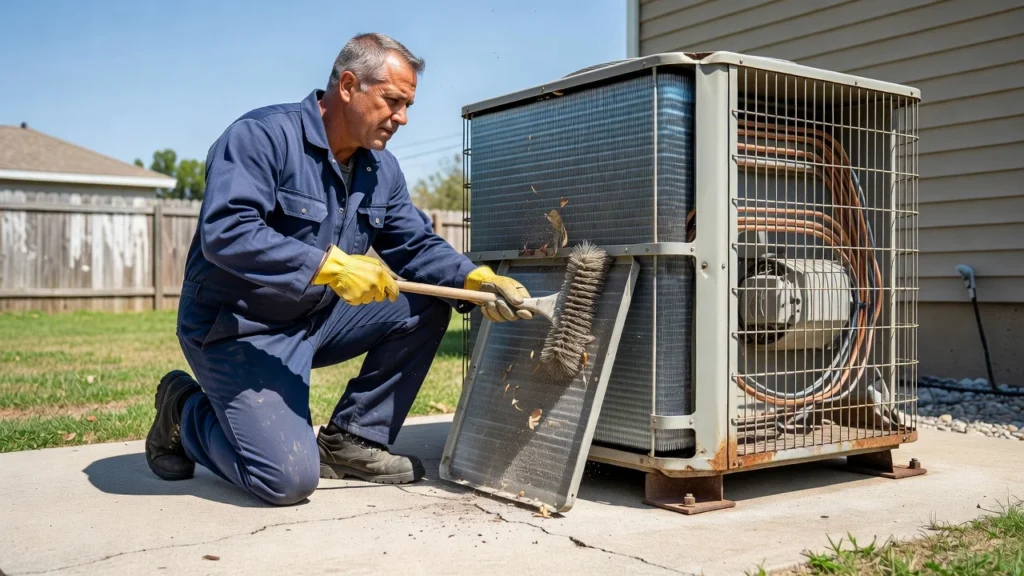
You don’t need to be a pro to handle some of this yourself between visits. A basic air conditioner maintenance checklist includes swapping filters every one to three months, keeping leaves and grass clippings away from the outdoor unit, and making sure vents aren’t blocked by furniture or rugs. Check your thermostat batteries too. It sounds silly, but dead batteries cause more “my AC is broken” calls than you’d believe.
- Replace or clean air filters regularly
- Clear debris from around the outdoor condenser unit
- Check and straighten bent condenser fins
- Inspect ductwork for leaks or loose connections
- Test the thermostat and replace weak batteries
- Have a technician check refrigerant levels and electrical connections
For the deeper stuff, like checking refrigerant charge, testing capacitors, and inspecting the heat exchanger for cracks, you want a licensed technician. That’s a job for someone with the right gauges and training, not a guess-and-check afternoon in the garage. A lot of homeowners print out a residential HVAC checklist and keep it on the fridge, which is a smart, simple way to stay on schedule without overthinking it.
Picking an HVAC Maintenance Plan and Knowing What It Costs
Most HVAC maintenance plans cost between 150 and 300 dollars a year for two visits, and that small cost almost always beats paying for surprise repairs or an emergency call during a heat wave or cold snap.
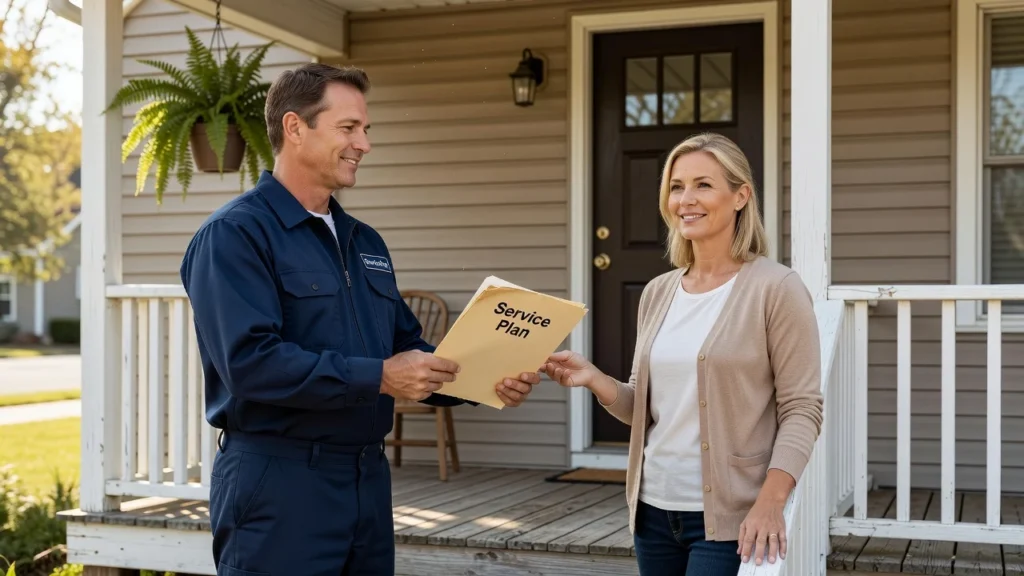
When you search for HVAC maintenance near me, you’ll notice most companies offer a preventative maintenance program instead of one-off visits. These programs usually bundle spring and fall tune-ups, priority scheduling if something breaks, and sometimes a discount on repairs. That last part matters more than people realize. If a part fails at 9 p.m. on a Friday, being a plan member often means you skip the line and skip the after-hours markup.
Wondering if it’s worth it for a smaller home? Even a compact HVAC system for a small house benefits from regular care, because smaller units often run more cycles per day to keep up with demand. Compare that 200-dollar plan against a 1,200-dollar compressor replacement, and the math isn’t close. A good plan is one of the few home expenses where paying a little now almost guarantees you pay a lot less later.
What To Do When Your Furnace Quits on a Freezing Night
If your furnace goes out in winter, check the thermostat settings and batteries first, then check the breaker and the air filter, and if it still won’t run, shut off the gas supply and call a licensed technician right away.
Before you panic, walk through the easy stuff. Is the thermostat set to heat, not cool? Did a breaker trip? Is the filter so clogged that the system shut itself down to protect itself? Many furnace brands, including Goodman, have troubleshooting guides that walk you through blinking status light codes on the control board, which tell you exactly what tripped the safety switch. It’s basically your furnace trying to talk to you in Morse code.
Bundle up, close off rooms you don’t need, and get a space heater running safely in the meantime if the wait for a technician stretches into hours. This is exactly the kind of night that preventative maintenance is built to prevent. A technician who saw that weak igniter back in October could’ve replaced it for forty bucks instead of you shivering under three blankets waiting for an emergency callout at triple the price.
The Bottom Line: Skip the Fix-It-Later Fee
Preventative HVAC maintenance is one of the few home habits where a small, boring routine turns into real, measurable savings, lower energy bills, fewer repairs, and equipment that lasts years longer than it would otherwise.
Remember Ray and his truck? Don’t be Ray. Two visits a year, a clean filter, and a quick glance at your outdoor unit is all it takes to dodge the Fix-It-Later Fee. It’s not complicated, and it doesn’t need to be expensive. It just needs to happen on a schedule instead of after something breaks.
An ounce of maintenance beats a pound of repair, every single time.
So grab a calendar, pick your spring and fall dates, and find a technician you trust. Your future self, the one not standing in a cold house at midnight, will thank you for it.
Key Takeaways
- Preventative HVAC maintenance can improve system efficiency by around 15 percent, which lowers monthly energy bills.
- Most HVAC maintenance plans cost between 150 and 300 dollars a year, far less than a single emergency repair or replacement.
- A basic HVAC preventive maintenance checklist includes filter changes, clearing outdoor unit debris, and thermostat battery checks.
- Scheduling two tune-ups a year, one in spring and one in fall, covers both your air conditioner and furnace.
- If a furnace goes out in winter, check the thermostat, breaker, and filter before calling for emergency repair service.
Frequently Asked Questions
What does HVAC maintenance actually mean in simple terms?
HVAC maintenance means having a technician regularly inspect, clean, and tune your heating and cooling system so small issues, like a dirty filter or worn part, get fixed before they cause a breakdown or drive up your energy bills.
What should I do first if my furnace goes out in the middle of winter?
Check the thermostat settings and batteries, then check your breaker box and air filter. If the furnace still won't run, turn off the gas supply as a safety step and call a licensed HVAC technician right away.
How is an HVAC preventive maintenance checklist different for furnaces versus air conditioners?
A furnace checklist focuses on the heat exchanger, igniter, and gas connections, while an air conditioner checklist focuses on refrigerant levels, condenser coils, and outdoor unit clearance. Both share filter changes and thermostat checks in common.
How much does an HVAC preventative maintenance plan usually cost?
Most residential preventative maintenance plans cost between 150 and 300 dollars a year, covering two seasonal visits. That cost is almost always lower than a single emergency repair call, especially during peak summer or winter demand.
Where do I find a trustworthy HVAC maintenance service near me?
Look for a licensed, insured local company with strong reviews and a clear maintenance plan option. Ask neighbors for recommendations, check if they service your specific furnace or air conditioner brand, and confirm pricing before you sign up.
Are Goodman HVAC troubleshooting codes something a homeowner can read themselves?
Yes, Goodman and most other brands use blinking status lights on the control board to signal specific problems. Homeowners can check the manual or manufacturer website to match the blink pattern before deciding whether to call a technician.
Is a printable HVAC maintenance checklist worth using at home?
Yes, a printable checklist kept somewhere visible, like on the fridge, helps homeowners remember simple tasks such as filter changes and clearing debris from the outdoor unit, keeping the system running well between professional visits.