Fall Heating Startup Checklist for Middle Tennessee Businesses
HVAC Maintenance · General · HVAC preventive maintenance checklist · HVAC maintenance plan
💡 The Quick Answer
Before heating season, a business should have its heating equipment started up, inspected, and tested by a qualified technician. That includes rooftop gas packs, heat pumps, and their backup heat strips. The visit should check the heat exchanger and venting for carbon monoxide risks, test burners, igniters, and flame sensors, and check belts, economizers, condensate drains, and filters. In-house staff can handle thermostat schedules, filters, and clear access to the units.
The first cold morning of the year is a bad time to find out a rooftop unit won’t light. Every fall, heating equipment that sat idle all summer gets called on at once. This checklist walks property managers and business owners through what to look at, what to hand to a pro, and what a fall startup visit should cover. It’s built for commercial buildings across Middle Tennessee, from Nashville and Lebanon to Mt. Juliet, Gallatin, Smyrna, and Murfreesboro.
If you want the bigger picture on why routine service pays off, start with our post on why preventative HVAC maintenance saves you money. This post is the hands-on fall version for commercial buildings.
Rooftop Gas Packs and Heat Pumps: Know What You Have
Most small and mid-size commercial buildings in Middle Tennessee are heated by rooftop gas packs, heat pumps, or both. Each one needs a different fall check, so start by listing every unit and its heat type.
A gas pack is a packaged rooftop unit with a gas burner for heat and electric cooling in the same cabinet. Its fall check centers on the burner, the heat exchanger, the flue, and the gas safety controls.
A heat pump heats by running its refrigeration system in reverse. Many commercial heat pumps also have electric heat strips as backup. Its fall check centers on the reversing valve, defrost controls, the outdoor coil, and the backup heat.
Walk the roof or ask your service provider for an equipment list. Note the unit tag, the area it serves, and its heat type. That one list makes every later step faster.
Heat Exchanger and Carbon Monoxide Safety Come First
The heat exchanger keeps burner exhaust separate from the air your building breathes. A cracked or corroded heat exchanger, or a blocked flue, can let combustion gases, including carbon monoxide, get where they shouldn’t. This is the most important part of a fall gas heat inspection.
Carbon monoxide is odorless and colorless. The CDC lists gas-burning furnaces as a common source. It also lists headache, dizziness, weakness, upset stomach, and confusion as common symptoms, often described as flu-like. The CDC recommends having gas heating equipment serviced by a qualified technician every year.
What you can do:
- If your building has CO alarms, test them and replace them on the maker’s schedule, or every 5 years if the maker doesn’t give a date.
- When the clocks change, check the alarm batteries. The CDC ties that check to the spring and fall time change.
- Keep flue outlets and fresh air intakes on the roof clear of debris and stored materials.
- Take complaints of headaches or stuffiness that ease outside the building seriously.
What a technician should do: inspect the heat exchanger, check the flue and draft, and test the gas safety controls. Do not open burner compartments or gas lines yourself.
If you smell gas, get everyone out. Don’t flip switches or use phones near the smell. From a safe spot outside, call 911, then your gas utility.
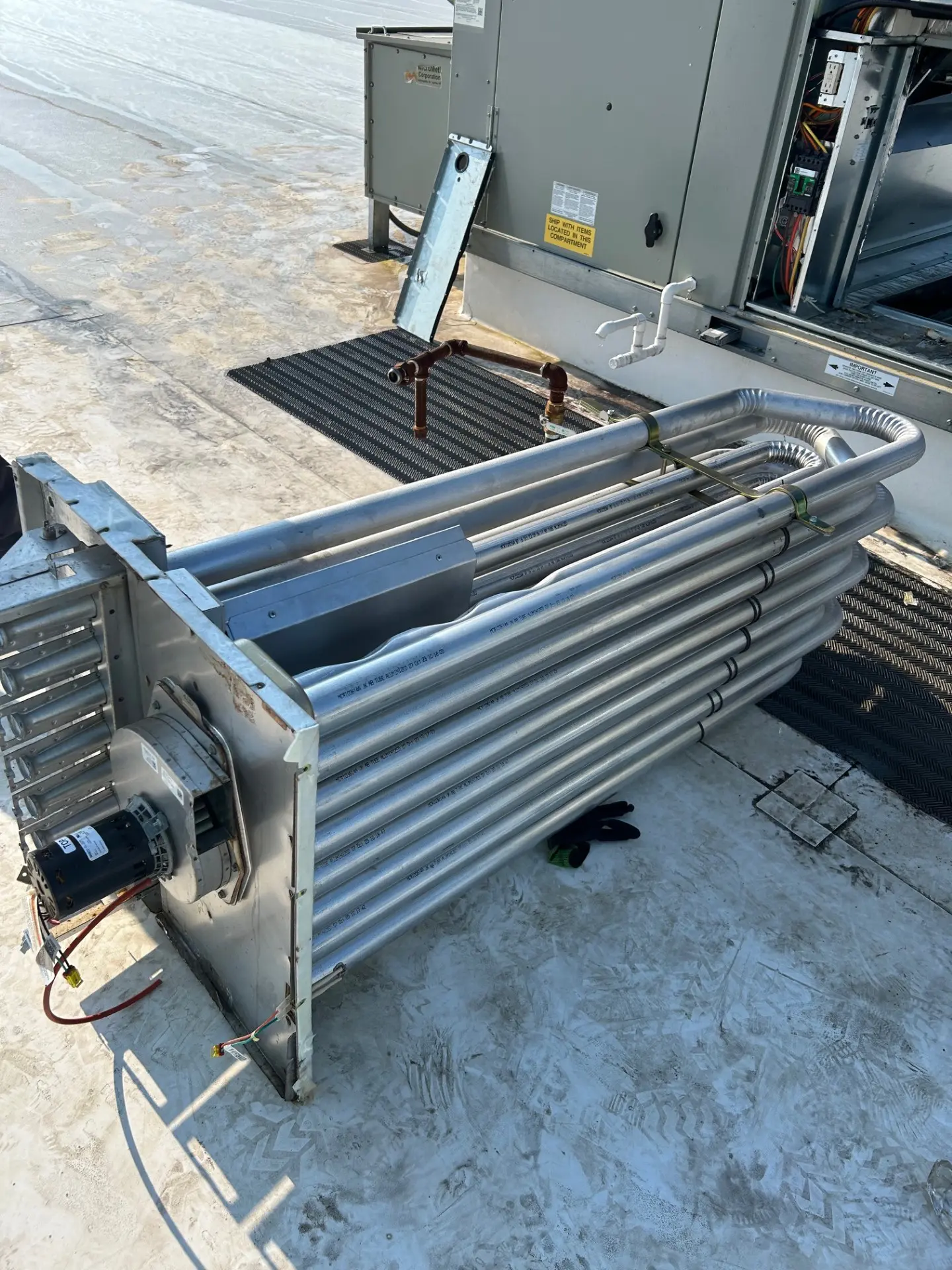
A heat exchanger inspection is a job for a trained technician with the right tools.
Burners, Igniters and Flame Sensors
Gas heat only works if three small parts do their job. The burner has to be clean. The igniter has to light it. The flame sensor has to confirm the flame, or the control shuts the gas off.
A dirty flame sensor is a common reason a heater lights, runs a few seconds, and then shuts down. The control has to prove flame before it leaves the gas valve open. If the sensor can’t see the flame, it closes the valve and may lock out after a few tries. Igniters wear out over time and can crack. Rust, dust, and spider webs can also foul burners after a summer of sitting. Venting problems, a pressure switch, or a blocked condensate drain on condensing equipment can shut the gas off too.
A technician should clean or check each part, then run the unit through full heating cycles and watch it light. A short dusty smell the first time the heat runs can be dust warming up on hot metal. A smell that stays, or any smell of gas, is not normal.
Filters, Belts, Thermostats and Schedules
These are the everyday items that cause a lot of “no heat” calls. Several of them your staff can check. Belts are not one of them.
Filters. Start the season with clean filters. ENERGY STAR recommends changing or cleaning HVAC filters every month during peak heating or cooling season. Dirty filters cost more to run, overwork the equipment, and lower indoor air quality.
Belts. Belt-drive blowers need belts with the right tension and no cracks, glazing, or fraying. A worn belt can slip or snap and stop airflow. Leave belt checks to a technician, and only with the power locked out.
Thermostats. Check that each thermostat is set to heat and that its readings match the room. ENERGY STAR suggests calibrating thermostats and adjusting setpoints for the season.
Schedules. Review occupied and unoccupied times on every thermostat or building control system. ENERGY STAR recommends setting back temperatures when the building is empty. On a heat pump, a big jump back up to the occupied setpoint can call the electric heat strips, which use more energy than the heat pump. Bring the building back a few degrees at a time, or use a schedule the controls already stage. Daylight saving time ends Sunday, November 1, 2026, so check that schedules change with the clock, and check CO alarm batteries the same day. Plan ahead for holiday hours, too.
Also keep supply and return vents clear of boxes, racks, and furniture. ENERGY STAR says as much as 25 percent more energy is required to distribute air if vents are blocked.
Emergency Heat Strips, Economizers and Condensate
These three are easy to forget because they don’t run much in summer.
Emergency and backup heat strips. On heat pumps, the electric heat strips need a test before cold weather. A technician should check that they come on when called and that their safety limits work. Don’t leave a heat pump thermostat on Emergency Heat unless the heat pump has failed. That setting shuts the heat pump off and runs only the backup heat, usually the electric strips, which cost more to run. Normal backup heat, often labeled auxiliary heat, comes on by itself when the heat pump needs help.
Economizers. An economizer brings in outside air for free cooling in mild weather. If its outdoor-air damper stays open in cold weather, it pulls in more outside air than the building needs and drives up heating costs. Have the damper, actuator, linkage, and sensors checked so the damper moves freely and closes as designed, including during morning warm-up.
Condensate. Heat pumps shed water when they defrost. Condensing gas equipment, the high-efficiency kind, also makes water as it runs. A standard non-condensing gas pack may not. On the equipment that does make water, a clogged drain or trap can cause a leak or open a safety switch that shuts the unit off. Have drains, traps, and drain pans cleared. Make sure water drains away from walkways and roof areas where it could freeze.
A heating problem found in October is a service call. The same problem found on the first freezing morning can be an emergency.
When To Call a Pro
Call a qualified HVAC technician for anything involving gas, combustion, refrigerant, or high-voltage electrical parts. Call right away for any of these signs:
- A gas smell, or a CO alarm sounding (get people out first)
- A unit that lights and then shuts off over and over
- A burning or electrical smell that doesn’t fade after the first minutes
- Heat pump outdoor coils that stay iced up after the unit should have defrosted
- Water leaking from a unit or ceiling
- Loud new noises, like squealing, banging, or grinding
- Spaces that won’t reach the set temperature
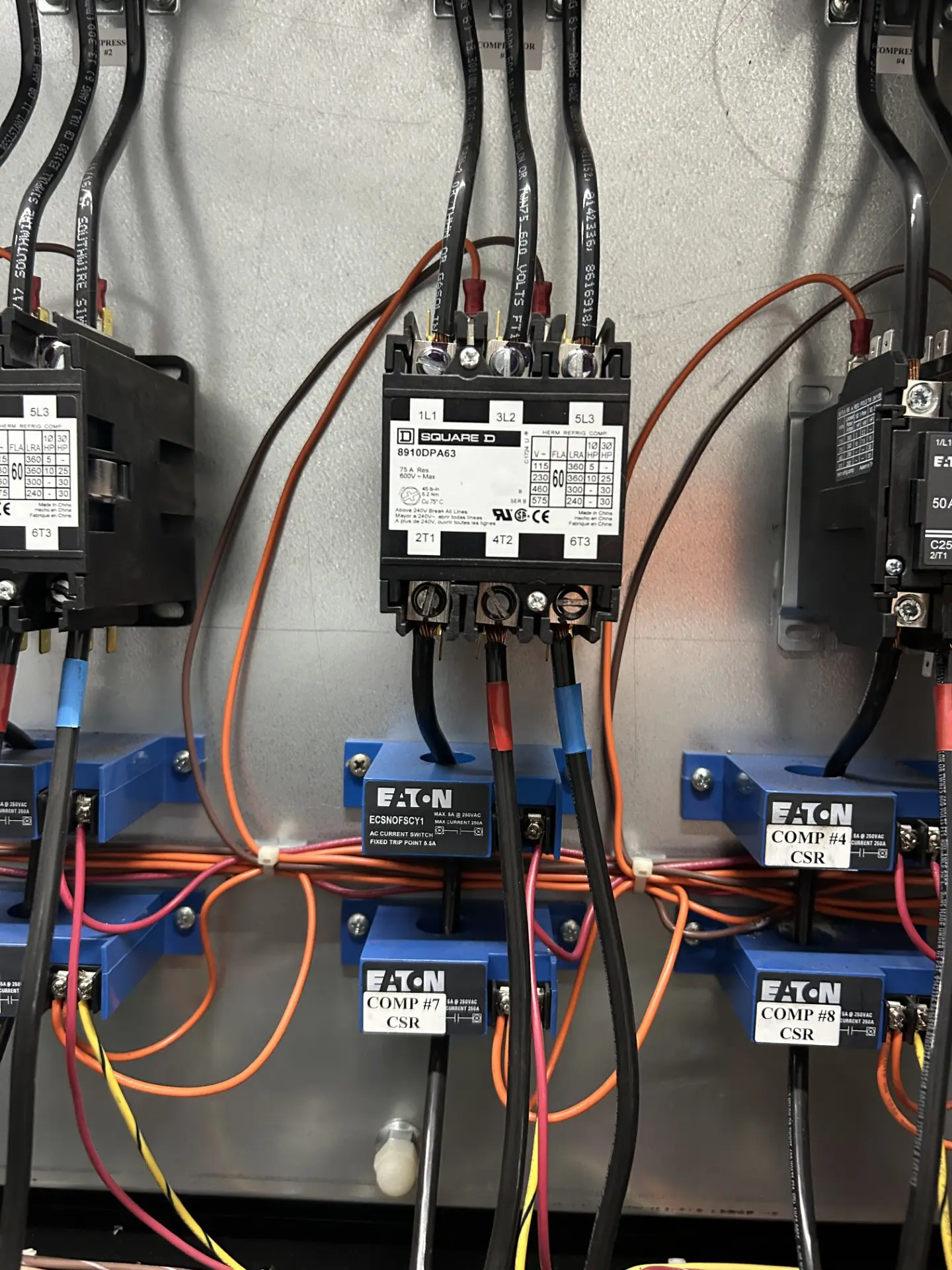
Contactors and current switches sit inside the control panel. Checking those connections stays with a technician.
Tri-County Mechanical is open 24 hours a day, seven days a week, for commercial HVAC emergencies. Call (931) 356-7776. To get ahead of it, schedule a fall startup through our maintenance plans or request a free facility walkthrough. Program members get priority emergency response. Check our service area to see the Middle Tennessee communities we cover.
Printable Fall Heating Startup Checklist
Print this page or copy the list for your building file.
Your staff can do:
- List every heating unit: tag, area served, gas or heat pump
- Install clean filters in every unit
- Set thermostats to heat and confirm readings match the room
- Review occupied and unoccupied schedules
- Recheck schedules after the time change on November 1, and check CO alarm batteries the same day
- Clear boxes and furniture away from vents and returns
- Test CO alarms, where installed, and replace them on the maker’s schedule or every 5 years
- Clear debris from around rooftop units, flues, and intakes
- Post the emergency service number where staff can find it
Have a qualified technician do:
- Inspect heat exchangers for cracks and corrosion
- Check flues, venting, and draft
- Test gas valves and safety controls
- Clean and check burners
- Check igniters and clean flame sensors
- Run each unit through full heating cycles
- Check blower belts, pulleys, and motors with the power locked out
- Test heat pump heating mode, defrost, and reversing valve
- Test emergency and backup heat strips and their limits
- Check economizer dampers, actuators, and sensors
- Clear condensate drains, traps, and pans on equipment that makes water
- Tighten electrical connections and check controls
✨ Key Takeaways
- ✓ Have every gas pack and heat pump started and tested before the first cold snap.
- ✓ Heat exchanger, flue, and gas safety checks come first because of carbon monoxide risk.
- ✓ Dirty flame sensors, worn igniters, and worn belts are common reasons heat fails.
- ✓ Check thermostat schedules, especially after the time change, and don’t use a deep recovery on a heat pump.
- ✓ Test backup heat strips, economizer dampers, and condensate drains before winter.
- ✓ Gas smell or CO alarm: get people out, then call 911 from outside.
Frequently Asked Questions
When should a business schedule its fall heating startup?
Schedule it in early fall, before the first cold nights. ENERGY STAR recommends pre-season tune-ups before each heating and cooling season. Booking early also gives time to order parts before you need heat.
What does a commercial heating startup include?
A technician inspects the heat exchanger and venting, tests gas safety controls, and cleans or checks burners, igniters, and flame sensors. They also check belts, filters, controls, economizers, condensate drains, and heat pump backup heat. Then they run each unit through full heating cycles.
Why does my rooftop unit light and then shut off?
A common cause is a dirty flame sensor that can’t confirm the flame, so the control shuts off the gas. Venting problems, pressure switches, or other safety controls can cause it too. Have a technician diagnose it, since repeated short cycles point to a safety control doing its job.
How do I know if my heating system has a carbon monoxide problem?
You can’t see or smell carbon monoxide, so you need working CO alarms and a yearly professional inspection. Headache, dizziness, weakness, and upset stomach that ease outdoors are a warning sign. If a CO alarm sounds, get everyone out and call 911 from outside.
Should I use emergency heat on a commercial heat pump?
Only if the heat pump has failed and you’re waiting on repair. Emergency heat shuts the heat pump off and runs only the backup heat, usually the electric strips, which cost more to run. Normal backup heat comes on by itself when needed.
What can my maintenance staff check without a technician?
Staff can change filters, set and check thermostats, review schedules, keep vents clear, test CO alarms, and keep debris away from rooftop units. Leave gas, combustion, refrigerant, belt, and electrical work to a qualified technician.
Steven Scalzo
25+ years experience
Owner of Tri-County Mechanical, LLC
- Published: October 29, 2026
Share This Article
Related Reading
Why Preventative HVAC Maintenance Saves You Money?
- Steven Scalzo
- September 10, 2026